

EXPERTISE
The 3 Transformations of Alignment
The strategic framework behind lasting organisational change.
Misalignment limits possibility. Alignment multiplies value.
Most business problems aren't strategy problems or performance problems. They're alignment problems. As organisations grow, ambition naturally outpaces capacity - and left unchecked, that gap creates friction across leadership, teams and execution, slowing progress and limiting what the organisation can achieve.
Alignment expands organisational capacity. It enables leaders to build systems where identity, strategy and execution reinforce each other, so the organisation can scale without strain.
The 3 Transformations of Alignment is the strategic framework that sits at the heart of my work with leaders and organisations. It’s focus on the three symptoms of misalignment and the corresponding 3 benefits of alignment offers a system to uncover where alignment is breaking down, what it’s costing your organisation and how to create the conditions for sustainable, long-term growth.

WHY ALIGNMENT
Alignment is structural work
Alignment is often thought of as a soft concept. But in actuality, it’s structural. And as structural work, it needs a structure to support it.
The 3 Transformations of Alignment is the strategic framework that sits at the heart of my work with leaders and organisations. It recognises that every organisation experiences the cost of misalignment in three fundamental ways.
THE PROBLEM
Costs of misalignment
COMMERCIAL COST
When organisations become transactional, they stop creating value and begin simply exchanging it.
ENERGETIC COST
When people, capability and energy are continually extracted rather than replenished, organisational capacity begins to shrink.
RELATIONAL COST
When friction builds across leadership, teams and ways of working, trust weakens, collaboration suffers and progress slows.
These costs rarely exist in isolation. They reinforce one another, creating a cycle that limits what an organisation is capable of achieving.
THE SOLUTION
The 3 transformations are the solution
The 3 Transformations of Alignment is the strategic framework that addresses each of these dimensions, helping organisations move beyond the symptoms of misalignment to create lasting organisational change.
Rather than treating the symptoms of misalignment, the three transformations address its underlying causes, creating the conditions for organisations to grow with greater intention, momentum and impact.
Transaction to Transformation
TRANSFORMATION 1

THE PATTERN
We live in a transactional world. So much so that many leaders have stopped noticing it. But it’s there in the performance conversations that reduce people to numbers instead of potential. It’s there in the meetings where information is exchanged but no new thinking emerges. It’s there in the brands that compete on price or convenience.
A transaction, by its very nature, exchanges value. It doesn’t create it.
This isn’t a problem in isolation, or as a one off. The challenge comes when transactional thinking becomes the organising principle of the entire organisation. You’ll see this when leaders start managing performance rather than developing people, when customers become revenue rather than relationships and when success is measured by what can be counted rather than the impact that can be created.
Transaction is the commercial cost of misalignment. But transformation is the solution.
THE SHIFT
Transformation takes an organisation from exchanging value to creating it by focusing on identity. It begins with the question, ‘Who do we want to become?’ before ‘What do we want to achieve?’
When an organisation knows who it is, every interaction becomes an opportunity to create something more than a transaction. Customers stay because they've been changed by the experience. People contribute because they believe in what they're building. Leaders measure success not only by results, but by the growth they create in others.
That's what transformation makes possible. That's when value stops being exchanged and starts being created.
TRANSFORMATION 2
Extraction to Reciprocity
THE PATTERN
Every transaction has a natural consequence. If the goal is to exchange value, then the next question is often, ‘How do we get more next time?’ Over time that instinct becomes a mindset that quietly becomes extraction.
You can usually spot it without looking too hard. Leaders expect more from their people than they invest back into them. Quarterly targets take priority over long-term relationships. The question quietly shifts from 'How can we create more value?' to 'How can we get more from what's already here?'
Extraction is the energetic cost of misalignment. Reciprocity is the answer.
THE SHIFT
Reciprocity offers a different way of thinking. It's not about giving things away or putting your organisation second. It's about recognising that businesses grow fastest when the people around them grow too.
Instead of asking, "How can we get more?", reciprocal organisations ask different questions. How can we leave our customers better off? How can we help our people grow, not just perform? How can we build stronger relationships with our partners and our community?
When organisations start thinking this way, strategy changes. Customers become more loyal because they receive genuine value. People contribute more because they feel valued and supported. And partners invest more because the relationship benefits everyone.
That's what reciprocity makes possible.
Instead of extracting value from every interaction, organisations create relationships where value continues to grow over time.
TRANSFORMATION 3
Friction to Flow
THE PATTERN
Every organisation experiences friction. The question is whether it's occasional or whether it has quietly become part of the way the organisation operates.
Friction is almost always obvious to your people in the organisation. They’ll come out of a meeting wondering what the point was. They’ll go slow taking any action because they expect (rationally) that the decision will shortly be revisited. And the most important conversations that people are having, occur in the hallways and behind closed doors rather than in the places where momentum can push progress forward
People know what needs to happen, yet somehow it never quite does.
Friction is the relational cost of misalignment. Flow is the solution.
THE SHIFT
Flow isn't about working faster or doing more. It's about creating the conditions where work can move in the direction it's intended to. That starts with understanding where friction exists, establishing clear priorities and creating genuine ownership across the organisation.
When people are working on the right things, decisions are made with confidence and effort is directed where it creates the greatest value, momentum begins to build naturally.
That’s flow.
And when you have it in your organisation, you’ll create a culture where identity, strategy and action reinforce one another, allowing people to spend less energy navigating the organisation and more energy building it.
CAPABILITIES
Putting alignment into practice
The 3 Transformations of Alignment isn't a standalone methodology. It's the thinking that sits behind every engagement and shapes each piece of strategic work I do with leaders and organisations to solve different, unique challenges. Depending on where and how alignment is breaking down, we apply the framework through one or more of the following capabilities:
Identity Alignment
Align your purpose, values and brand narrative so the organisation has a shared foundation for every decision it makes.
Strategy Activation
Turn your organisation's strategic intent into coordinated action that creates lasting momentum.
Organisational Architecture
Redesign how work flows through your organisation, so growth becomes more intentional.
Culture Transformation
Design and embed the conditions needed to build trust, collaboration and accountability.
Executive Evolution
Evolve your leadership to strengthen the thinking, behaviours and capabilities needed to lead the next phase of growth.
NOT SURE WHERE TO START?
Every organisation experiences alignment differently.
Start the conversation and we’ll find the right entry point together. Schedule a conversation →
THE OUTCOME
What becomes possible
When identity, strategy and action reinforce one another, organisations change in fundamental ways. They stop working against themselves and begin directing their energy towards what matters most.
When identity, strategy and action reinforce one another, organisations stop wasting energy proving themselves and start investing it in creating something worthwhile. Ambition is no longer constrained by internal friction, competing priorities or uncertainty. It finally has the capacity to become reality.
This is what alignment makes possible. Organisations create greater commercial value, stronger relationships and the capacity to sustain growth without losing what made them successful in the first place.

MEET YOUR EXPERT
From CEO to strategic alignment expert
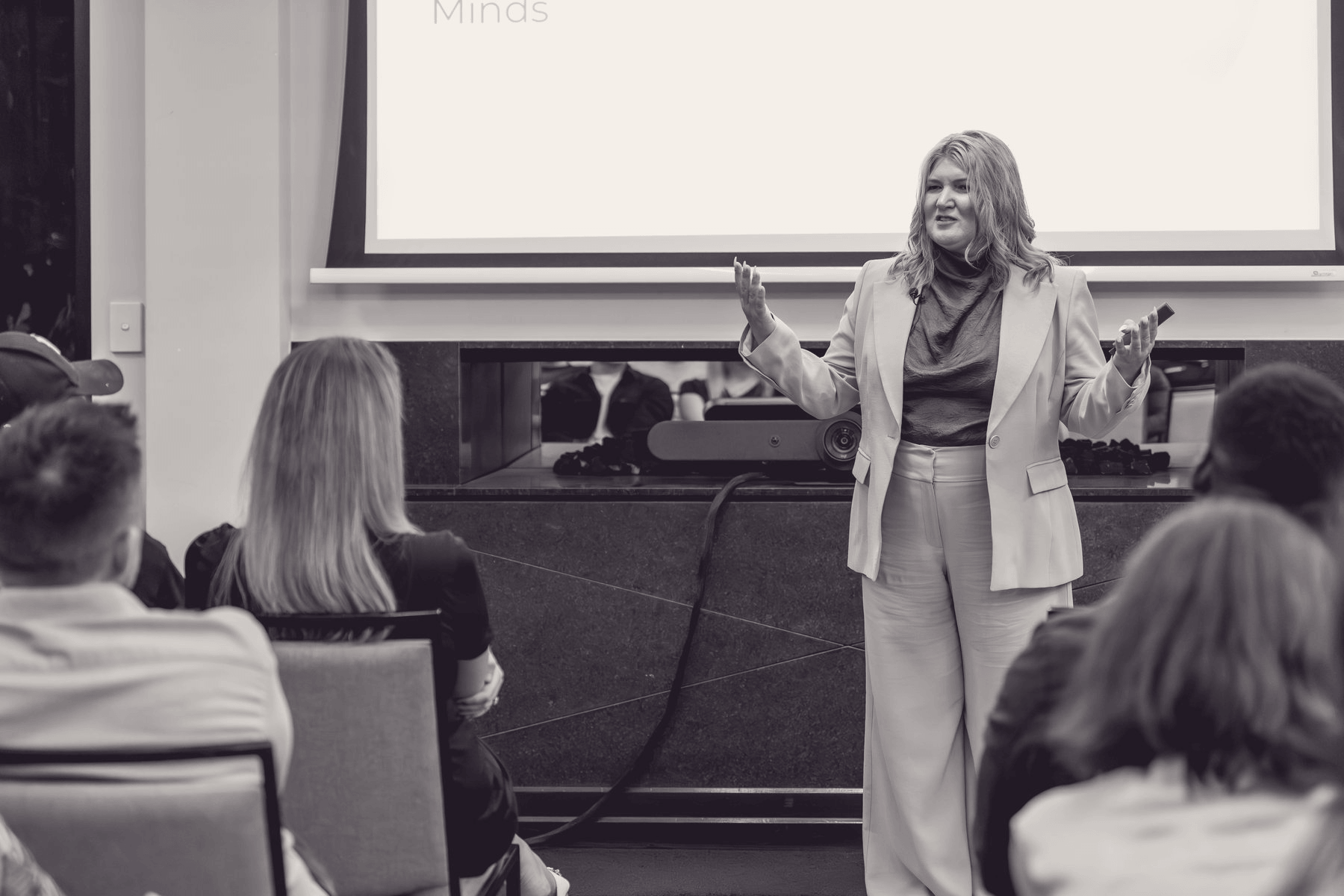
Liz McMillan is a former CEO and strategic alignment advisor with more than 20 years' experience leading technology, publishing and SaaS organisations across Silicon Valley and Australia.
She has led Dictionary.com through rapid growth and exit, led Teach Starter through transformation and exit, overseen more than $500M in M&A and managed over $300M in annual revenue.
"The goal isn't to add more frameworks. It's to remove what's getting in the way and strengthen what matters."
Her work is built on experience, not just theory, and combines the perspective of a CEO with the discipline of a strategic advisor, translating complex organisational challenges into structured, practical change.

READY TO EXPLORE WHAT’S POSSIBLE?
See what The 3 Transformations of Alignment could unlock in your organisation
Every organisation is different. If you'd like to explore how The 3 Transformations of Alignment could help your organisation create greater value, strengthen relationships and expand its capacity for growth, I'd love to start the conversation.